Digital painting / Giclée print on canvas, mounted on a plywood panel To be finished with gold applied around the Eye of Ra and on the pharaoh's crown
Type
One-of-a-kind / To be exhibited and sold at a solo exhibition
Solo exhibition
Late 2026 to early 2027 (dates and venue in preparation)
* This one-of-a-kind work is scheduled to be exhibited and sold at an upcoming solo exhibition. Dates and venue will be announced once confirmed. For purchase or reservation inquiries, please feel free to contact us below.
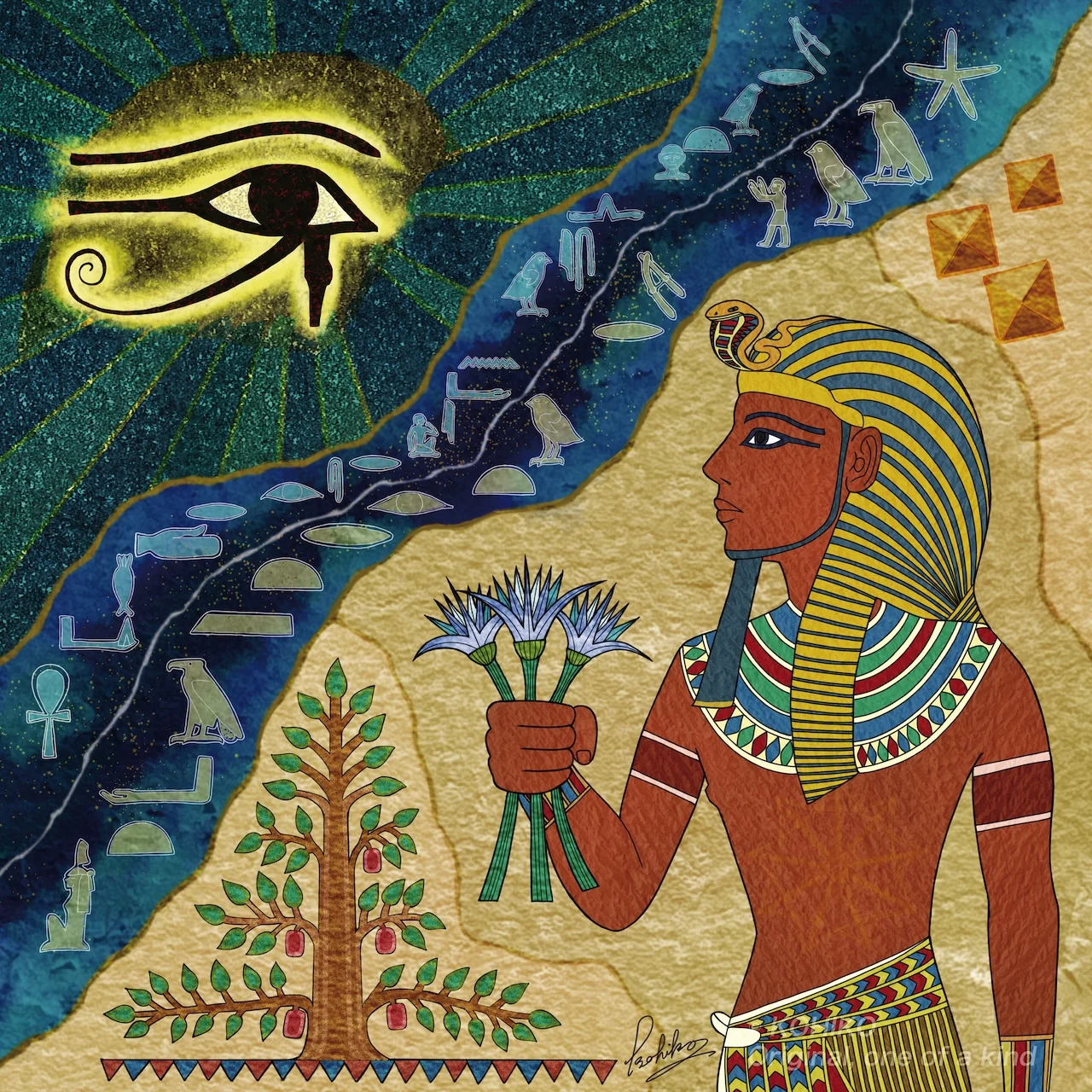
The more power one holds, the more one should carry flowers, not a sword.
It began with a pharaoh in a dream
Why, all of a sudden, a painting in the style of an Egyptian mural?
It began when these motifs appeared to me in a dream. I cannot say what they meant. I only felt as though I was being told, "Paint this." That was how this work began.
Flowers, not a sword: how the composition emerged
As I recalled the scene from the dream, an image of the whole took shape: the Eye of Ra, the flowing hieroglyphs, and the position of the king. Their relationship to one another rose up naturally.
At first I intended to give the king a sword. But I had an intuition that this was not right.
When I looked at the whole again, it made sense. The more power one holds, the more one should carry flowers rather than a sword. Those with power and position should treat the weak with compassion, and fulfill the mission given to them with gratitude. That is where the work arrived.
"The Eye of Heaven": Otentosama is watching
The Eye of Ra, the sun god, quietly watches over the pharaoh.
In Japan there is an old saying: "Otentosama ga miteiru," the sun is watching. It means doing your part not because someone is watching, but even when no one is. It means looking at your own actions through the eyes of another self. The gaze of the sun, from which there is no escape, is a symbol of that. This is the meaning I gave to the title, "Ten no Me," the Eye of Heaven.
The tree bears fruit, the footprints remain
For one who carries a true mission, a tree will in time grow and bear fruit.
And that way of living, like the pyramids, remains as footprints across time.
The number 44.4: four and four make happiness
The artwork measures 44.4 × 44.4 cm. For me, the number 4 is special, symbolizing stability and the king.
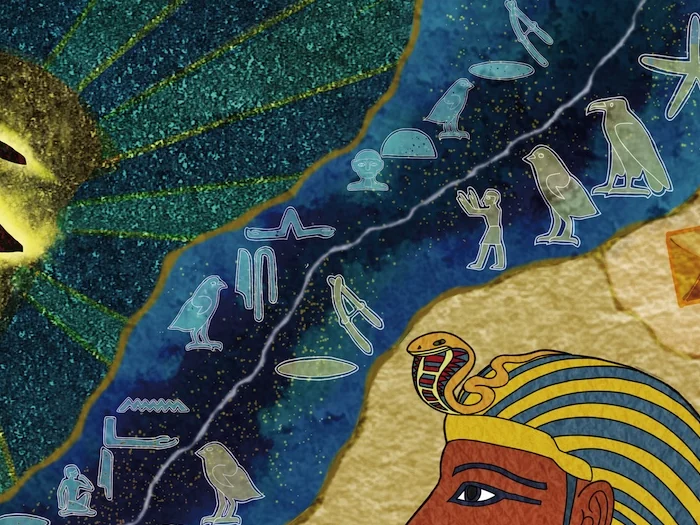
Along the boundary between the desert and the cosmos, I have hidden a composition in which a 4 and a mirrored 4 face each other.
Four and four. In Japanese, "shi" and "shi" together become "shiawase," happiness.
Not gaining power, but what that power is used for. This work carries that question.
Hieroglyphs linking Heaven and humankindHIEROGLYPHS
The band of glyphs flowing between the Eye of Ra and the pharaoh
What are hieroglyphs?
Hieroglyphs are the pictorial script of ancient Egypt, preserved on the walls of temples and tombs.
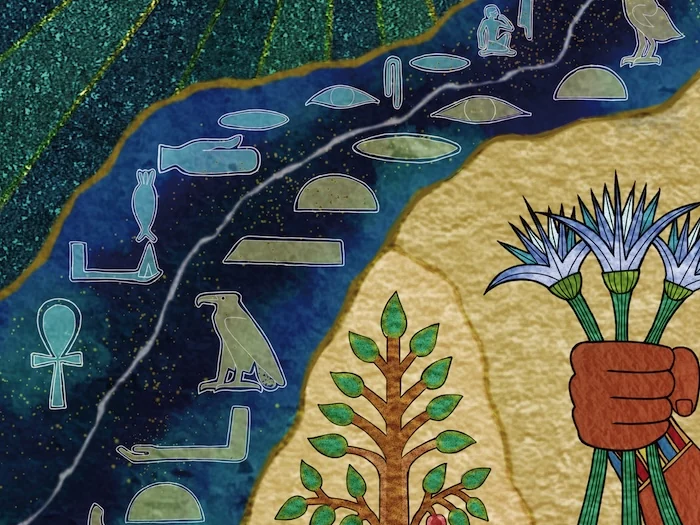
In this work, the hieroglyphs are not mere decoration. I researched each glyph before choosing it, and gave each one a meaning.
The side of the Eye of Ra: what Heaven gives
On the side nearer the Eye of Ra, I placed this meaning:
"With love and mercy that seek nothing in return, watching over people's trials and growth, and giving life."
The lower band of glyphs, and the pharaoh's hand holding flowers
The side of the pharaoh: what humankind fulfills
And on the side nearer the pharaoh:
"Being grateful for what one has been given, fulfilling with love the mission entrusted to oneself."
Heaven gives, seeking nothing in return. And each person, in the place where they stand, fulfills the role that is theirs to fulfill. The upper and lower hieroglyphs express this relationship.
The skin of Sapporo soft stone: memory held by fireSTONE TEXTURE FROM SAPPORO
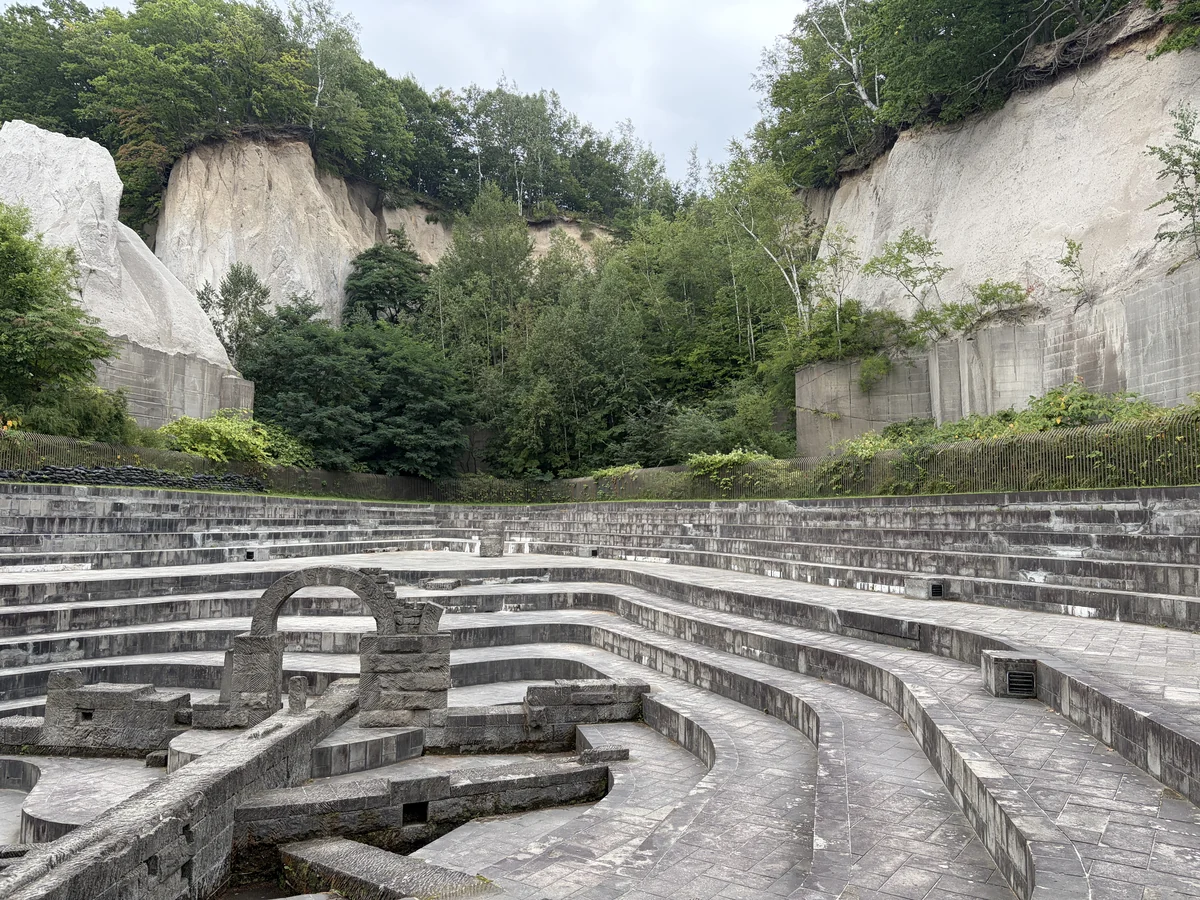
Ishiyama Ryokuchi (Minami-ku, Sapporo), a former Sapporo soft stone quarry
A mural's surface, from Sapporo stone
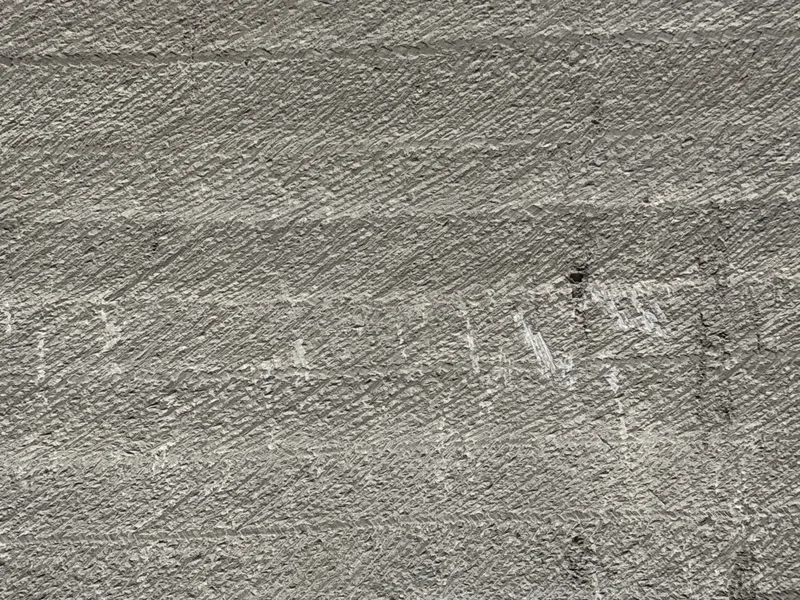
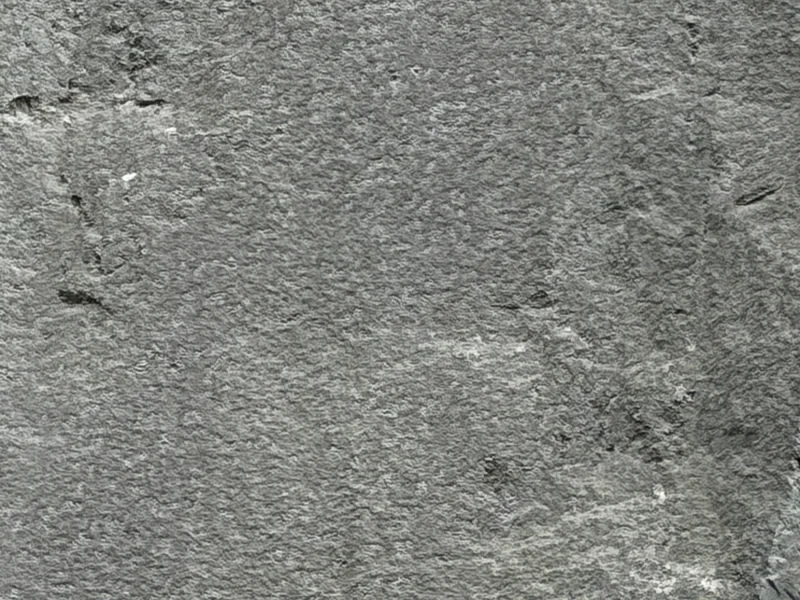
To give the painting the rough, grainy surface of an ancient Egyptian mural, I photographed cut faces of stone at Ishiyama Ryokuchi in Minami-ku, Sapporo, and layered those photographs over the image as texture.
A stone born from the Shikotsu eruption
Ishiyama Ryokuchi is a park built on the site of a former Sapporo soft stone quarry. Sapporo soft stone formed about 40,000 years ago, when pyroclastic flows from a massive eruption of the Shikotsu volcano cooled and hardened. It has been quarried since the early Meiji era and is now designated a Hokkaido Heritage.
A stone born of the power of fire, carrying a long history. That history, too, is woven into this work.
* All photographs of Ishiyama Ryokuchi in this section, including those used as texture in the work, were taken by the artist. Please do not reproduce or reuse them without permission.
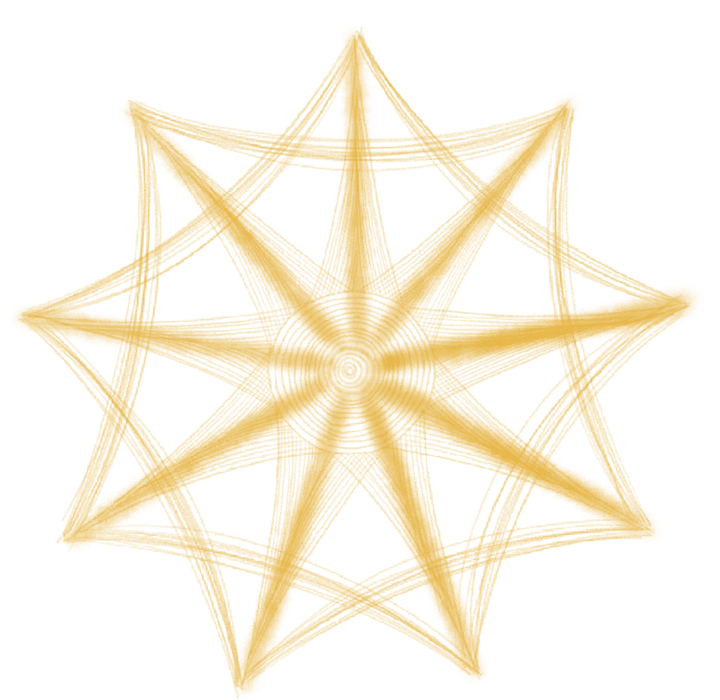
The nine-ray crest on the pharaoh's chestNINE-RAY CYMATICS CREST
This work's cymatics: the king's frame of mind
Every one of my works includes a cymatics pattern. The theme this time is "the king's frame of mind."
I sounded the word "hansei," self-reflection, the act of looking back on one's own actions each day, through my cymatics device, and the vibration brought a form to the surface of the plate. Nine of these forms, gathered together, make up this radiating nine-ray crest. A crest of nine radiating rays is almost unknown even among Japanese shrine crests and family crests.
The number nine
In ancient Egypt, the nine deities beginning with the creator god Atum were called the Ennead, and were worshipped as a single divine family. They were called by a word that meant "nine" itself. In Egypt, three stood for "many," and nine, three times three, stood for "all" and "completeness."
In numerology, too, three, six and nine are said to relate to the making of the universe, and nine is the number of completion, the last to be fulfilled.
Beneath the Eye of Ra
The Eye of Ra, the sun god, is a symbol of the one who watches over all things. The pharaoh's duty was to uphold Ma'at: truth, justice and order. After death, the king's heart was weighed on a scale against the feather of Ma'at, and if they did not balance, he could not go on. Precisely because he was king, what lay in his heart was questioned.
The power to see oneself with the Eye of Heaven
Those who hold power, above all, should look back on themselves each day. The objectivity to see oneself through the Eye of Heaven, the Eye of Ra, is what gives one the strength to carry one's mission forward rightly.
I placed this crest, which expresses that frame of mind, on the pharaoh's chest, at the position of the heart. To keep this frame of mind within, and to live together with the Eye of Heaven: this is the stance of the king I sought to express in this painting.
The form born from sound came first; its meanings were found afterwards. The Ennead of Egypt and the nine of numerology were there from the beginning. I treasure the way they came together within a single painting.
KOHIKO, painter
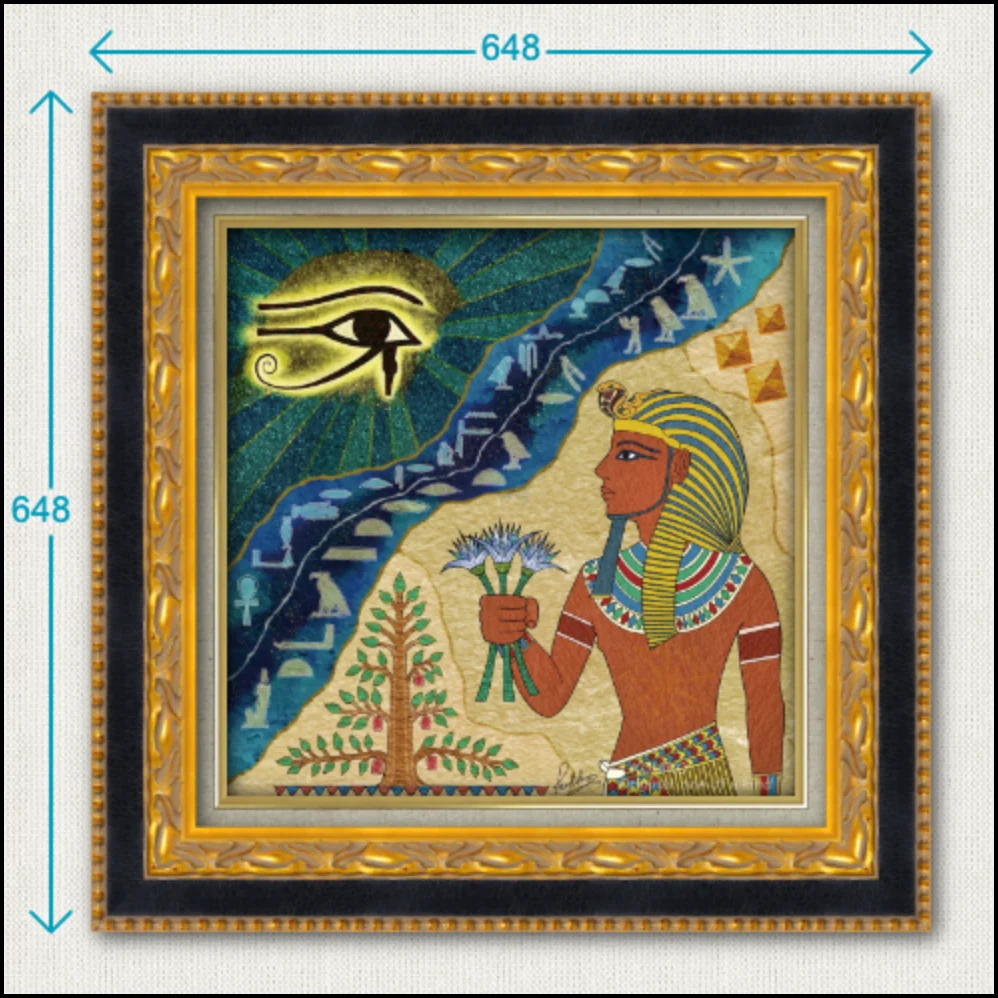
Framing previewFRAMED FOR EXHIBITION
This work is a giclée print on canvas rather than paper, mounted on a plywood panel and set in an oil painting frame. It is made on canvas so that further work can be done over the print. As a finishing touch, gold will be applied around the Eye of Ra and on the pharaoh's crown, and the completed work will then be exhibited.
Framing preview for the exhibition (outer frame 648 × 648 mm)
Artwork size
444 × 444 mm (square)
Work
Giclée print on canvas, mounted on plywood panel + gold finish (planned)