CYMATICS
What Is Cymatics?Geometric patterns woven by sound
Cymatics is the geometric pattern that makes sound visible as frequency. Each pitch produces its own distinct form. I paint these "shapes of sound" deep within my paintings.
Sound has a visible form
Scatter sand or salt on a plate and play a tone of a certain pitch: the grains gather where the plate does not vibrate, and a symmetrical pattern appears. The same frequency always produces the same form. It is not chance; the form is determined by the laws of nature.
This is what distinguishes it from the mandala. Mandala patterns are characterized by the same motif arranged geometrically, and have long been used around the world in clothing and architectural decoration: patterns created, in a sense, by human hands※. Cymatics, by contrast, is a form that emerges naturally from the vibration of sound. That is why each work carries an inevitability, a reason why it takes this form.
* The description of mandala patterns is based on the explanation by the Japan Thread Mandala Association.
Its origin lies in physics more than 200 years ago
The first to systematize these "shapes of sound" was the German physicist and musician Ernst Chladni (1756–1827), known as the father of acoustics. In 1787, he scattered sand on metal plates, sounded them with a violin bow, and recorded the patterns, leaving 166 figures across 11 plates in his book. These are the Chladni figures still known today.
Later, the Swiss physician Hans Jenny extended this research to all kinds of matter, including sound, water, and powder, and named it "Cymatics" in the 20th century.Cymatics is a development built on the foundation of Chladni figures.My works are painted with reference to this authentic origin.
The Original Forms I Refer To: Chladni Figures
From Discoveries in the Theory of Sound (1787). Every one of these is a real pattern created by a sound frequency.


Source: Ernst Chladni, Entdeckungen über die Theorie des Klanges, Leipzig, 1787 (public domain)
How I Use Cymatics in My Work
I bring cymatics into my works through the following process.
- I have built a program that derives frequencies from spoken words, based on tables of the Japanese syllabary and voiced sounds.
- Using that program, I enter the kotodama (words believed to hold spiritual power) or phrases that the client holds dear, or the words I have woven into the work, and play the combined frequency as sound. On a simple cymatics device I built myself, I observe the forms that actually appear and let my imagination grow from them.
- I select the closest match from the Chladni figures, the origin of cymatics, add my own imagery, and complete the painting.
This is the foundation of my cymatics art.
CYMATICS LAB
My Handmade Cymatics Device and Experiment LogPlaying the sound and seeing the form with my own eyes
The patterns I paint are not pure imagination. I play frequencies measured from my own voice, watch salt draw a form, and paint from what I see. Here I introduce the device I actually built and a record of my experiments so far.
1. Device Setup
| Part | What I use | Role |
|---|---|---|
| Exciter | Dayton Audio DAEX25FHE-4 | Fixed to the base board, with the vibrating plate attached on top; turns sound into vibration of the plate |
| Amplifier | Nobsound NS-01G Pro | Receives sound from a smartphone via Bluetooth and drives the exciter |
| Vibrating plate | Aluminum plate | Cut into a square and painted black so the salt is easy to see |
| Powder | Salt | Gathers where the plate does not vibrate (the nodes) and draws the form |
| Sound source | Kotodama Cymatics Studio (my own app) | Plays the measured frequencies of my own voice as a chord for each word |
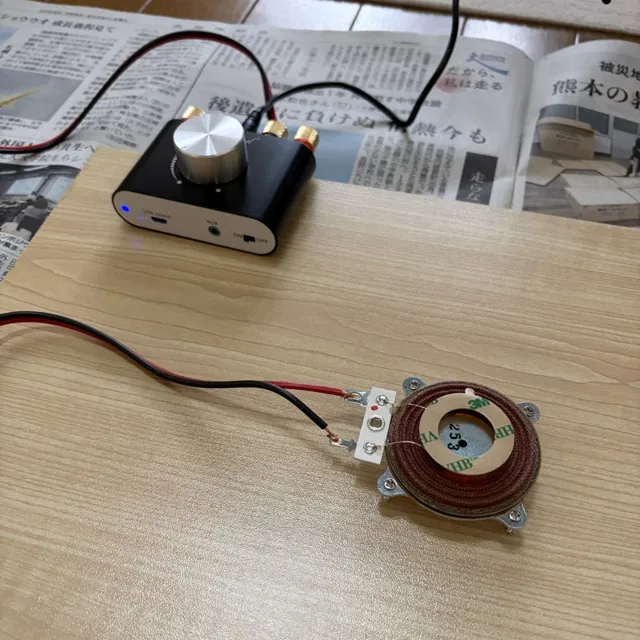
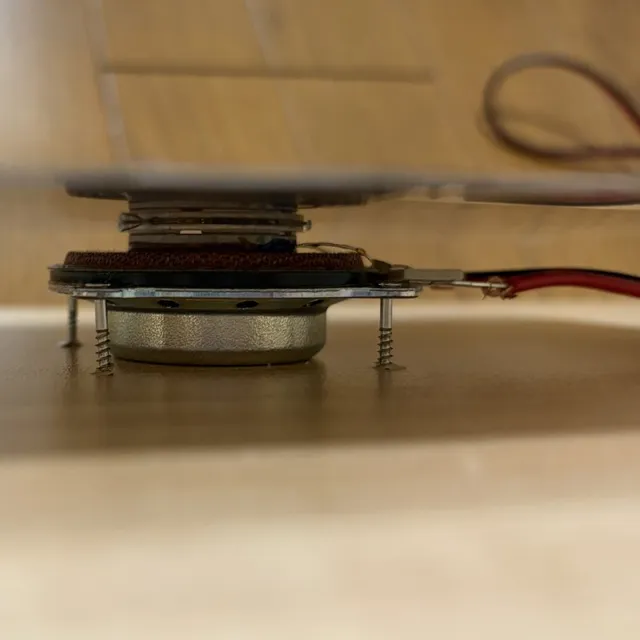
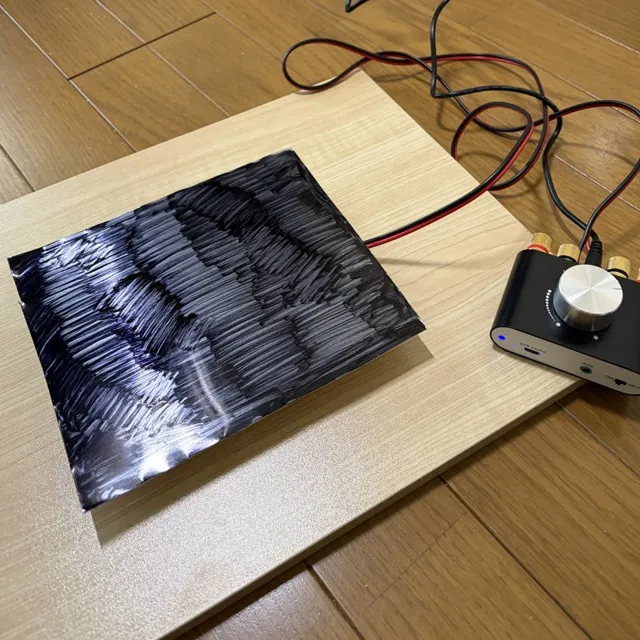
2. How the Experiment Works
My app plays the frequencies of a word as a chord and sends it to the amplifier via Bluetooth. As the exciter shakes the plate, salt is thrown off the parts that move strongly and gathers where the plate stays still (the nodes), and a form appears. The frequencies are values I measured by recording my own voice, syllable by syllable, at the first resonance of each vowel (the first formant).
3. Experiment Log
Even on the same device, the salt took a different shape for each word.
愛 Ai — Love
あ 621Hz + い 234Hz
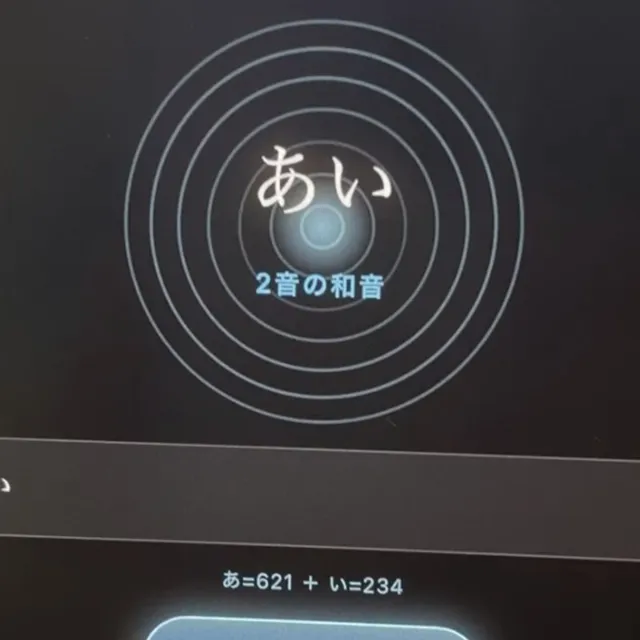
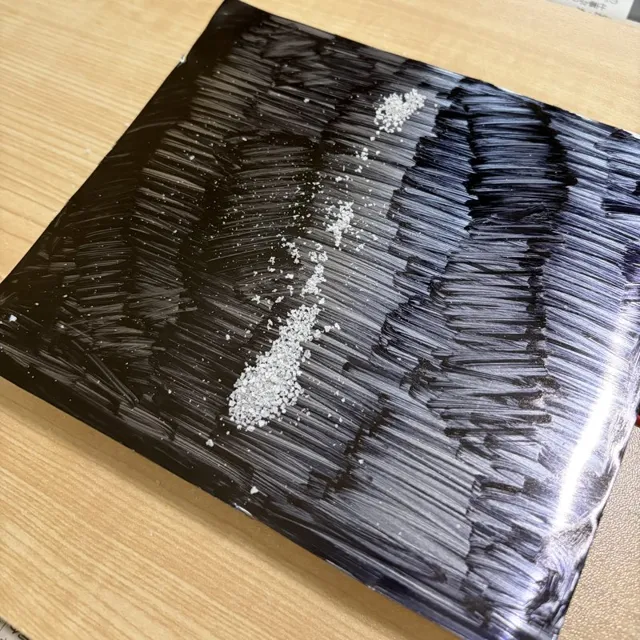
Form that appeared: a bar-like form
反省 Hansei — Self-reflection
は 234Hz + ん 352Hz + せ 234Hz + い 234Hz
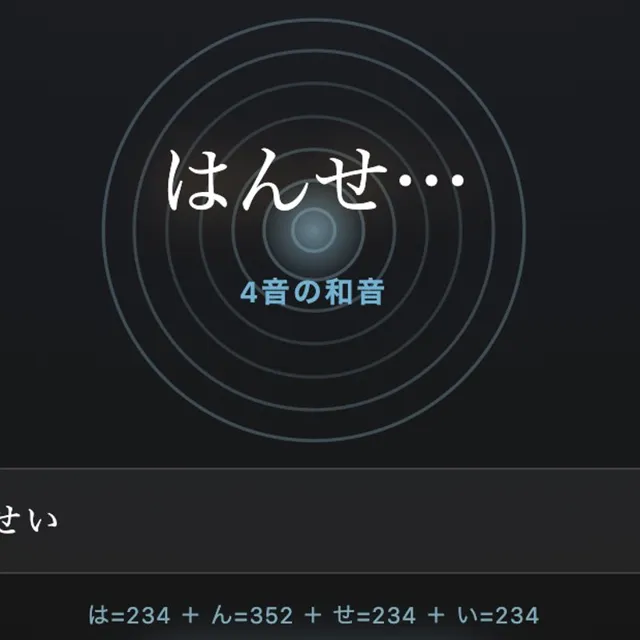
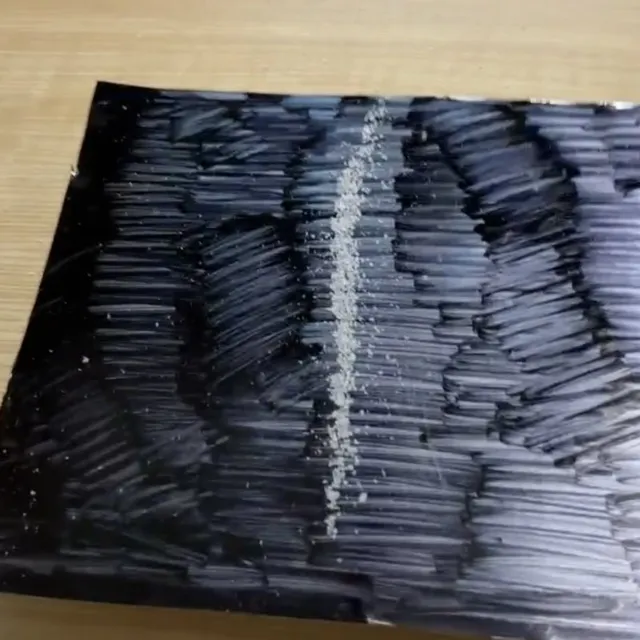
Form that appeared: a single line
感謝 Kansha — Gratitude
か 609Hz + ん 352Hz + し 305Hz + や 633Hz
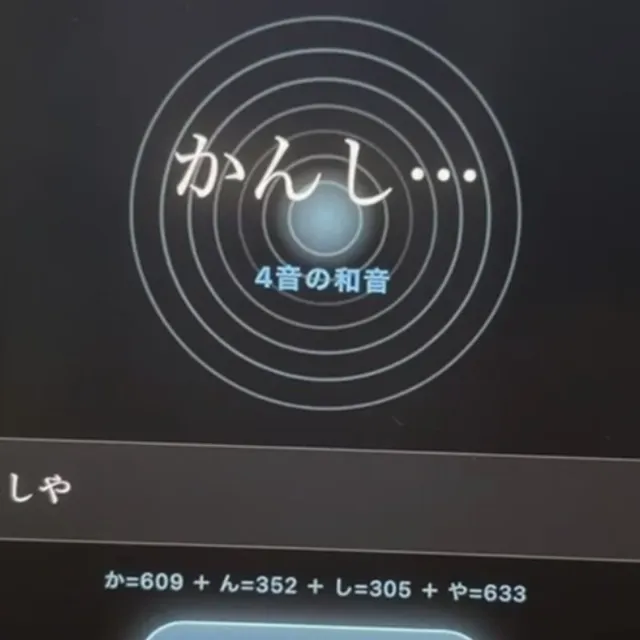
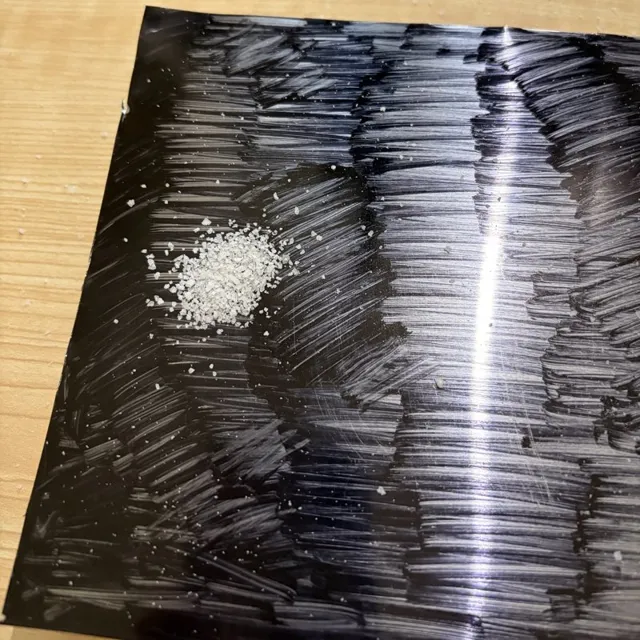
Form that appeared: one cluster
平和 Heiwa — Peace
へ 223Hz + い 234Hz + わ 609Hz
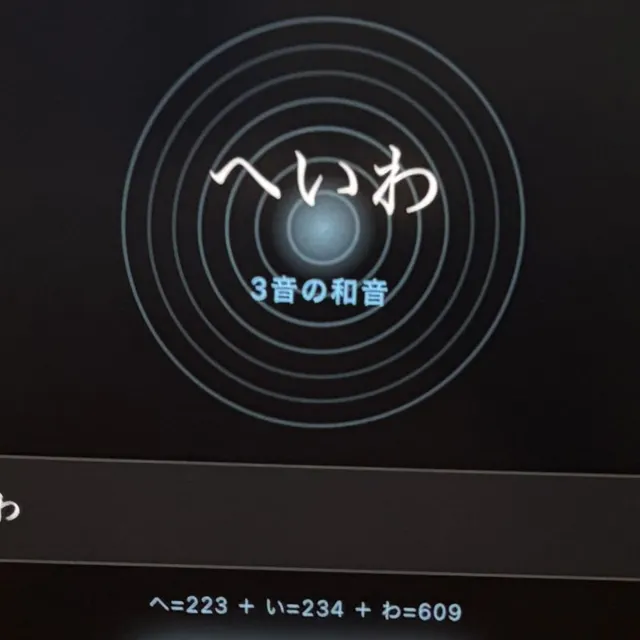
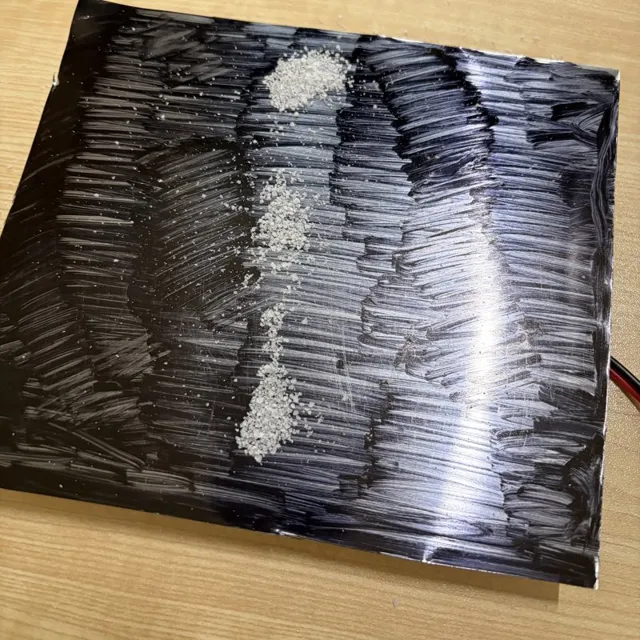
Form that appeared: three clusters
4. From Form to Pattern
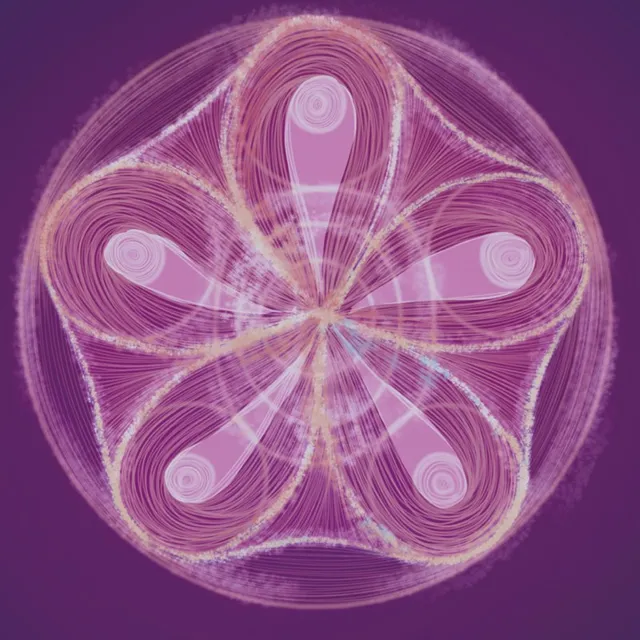
My plate is square, and the forms that appear are simple ones, such as lines and clusters. Taking these real forms as my starting point, I search the figures Chladni left behind for ones that match, lay them over each other, and finally decide by intuition to complete the pattern.
For “Love,” a bar-like form appeared, and from it I envisioned a shape stretching out in five directions. I overlaid this with Chladni figures and drew it out as a pattern like a cherry blossom.

* The frequencies are measurements of the artist's own voice. The forms that appear also change with the plate's material, size, and how it is fixed.